
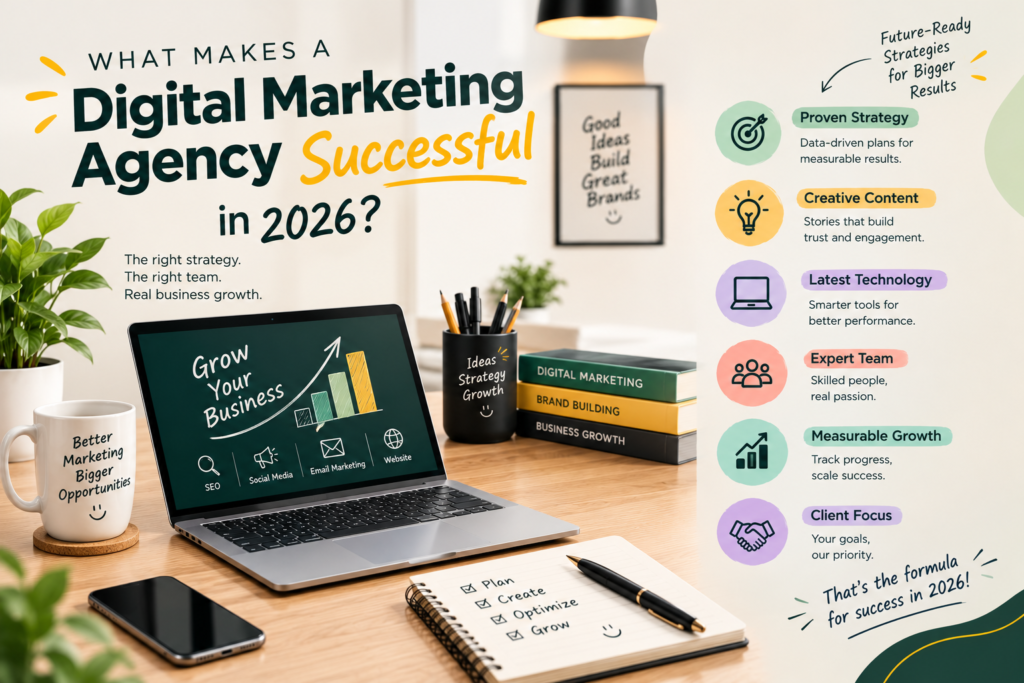
Digital marketing keeps changing as businesses adopt new technologies, customer habits evolve, and online competition grows. In 2026, having a website and posting on social media is no longer enough to stand out. Businesses need clear strategies, useful content, strong customer relationships, and measurable results to grow online.
A successful digital marketing agency understands these changing needs and helps businesses reach the right audience through the right channels. It combines creativity, technology, and data to build marketing campaigns that support real business goals.
1. A Clear Digital Marketing Strategy
A successful digital marketing agency starts with a clear plan. Every business has different goals, target customers, budgets, and challenges. Therefore, a single marketing strategy cannot work for everyone.
Before launching a campaign, an agency should understand the client’s business, study its competitors, and identify its target audience. It should also set clear goals, such as increasing website traffic, generating leads, improving brand awareness, or increasing sales.
A well-planned strategy helps businesses use their marketing budgets wisely. It also makes it easier to measure progress and identify areas that need improvement.
In 2026, successful agencies focus on creating strategies that match business objectives rather than simply following popular marketing trends.
2. Strong Search Engine Optimization (SEO)
Search engine optimization remains an important part of digital marketing. SEO helps businesses improve their visibility when people search online for relevant products, services, or information.
However, modern SEO involves much more than adding keywords to website pages. It includes helpful content, technical website performance, mobile usability, relevant internal links, and a positive user experience.
Search behavior is also changing as people use AI-powered search tools and conversational queries to find information. Businesses need clear, useful, and trustworthy content that directly answers their audience’s questions.
A successful digital marketing agency understands these changes and develops SEO strategies around user needs. Instead of focusing only on rankings, it works toward attracting relevant visitors who are more likely to become customers.
3. Smart Use of Artificial Intelligence
Artificial intelligence (AI) is becoming an important tool for digital marketing agencies in 2026. It can help marketers research topics, analyze campaign data, organize tasks, generate content ideas, and improve advertising workflows.
AI tools can save time and help agencies work more efficiently. For example, an agency can use AI-assisted analysis to identify patterns in customer behavior or discover opportunities to improve an advertising campaign.
However, technology alone does not guarantee success. AI-generated content may contain errors, lack originality, or fail to understand the audience’s real concerns.
Successful agencies combine AI tools with human creativity, experience, fact-checking, and strategic thinking. They use technology to improve their work while ensuring that the final content remains accurate, helpful, and relevant.
4. High-Quality Content Marketing
Content plays a major role in building trust and attracting potential customers. Blog posts, website pages, videos, infographics, email newsletters, and social media updates can help businesses explain their services and answer customer questions.
In 2026, successful digital marketing agencies focus on creating content that provides real value instead of publishing articles simply to fill a website.
For example, a company selling website design services could publish a guide explaining how to choose a mobile-friendly website. This content helps readers understand the topic while introducing the company’s expertise.
Good content should be easy to understand, original, well-organized, and relevant to the target audience. Agencies should also update older content when information becomes outdated.
A strong content strategy can support SEO, social media engagement, lead generation, and long-term brand growth.
5. Data-Driven Decisions
A successful digital marketing agency does not depend only on guesswork. It uses data to understand campaign performance and make better decisions.
Important metrics may include website traffic, conversion rates, cost per lead, customer acquisition cost, advertising return, and engagement levels.
For example, if a paid advertising campaign receives many clicks but generates few inquiries, the agency may need to improve the landing page, review audience targeting, or adjust the advertising message.
Regular performance analysis helps identify problems before they waste too much of the marketing budget.
In 2026, agencies must also pay attention to data quality, privacy requirements, and the limitations of tracking tools. Clear reporting helps clients understand what their campaigns are achieving and where further improvements are possible.
6. Effective Social Media Marketing
Social media remains a valuable way for businesses to connect with customers, share information, and build brand recognition. However, success requires more than posting frequently.
A good social media strategy focuses on the platforms where the target audience is most active. It also uses suitable content formats, such as short videos, educational posts, customer stories, and interactive content.
Successful agencies understand that different platforms serve different purposes. LinkedIn may be useful for business-to-business marketing, while Instagram may be better suited to visual storytelling and product discovery.
They also pay attention to comments, messages, and audience feedback. Responding to customers and encouraging meaningful conversations can help a brand build stronger relationships.
The goal is not simply to gain followers but to create engagement that supports wider business objectives.
7. Personalized Customer Experiences
Customers expect businesses to understand their needs and provide relevant information. Personalized marketing can help companies communicate more effectively with different audience groups.
For example, an online store might send product recommendations based on a customer’s interests, while a service provider might share helpful emails related to a visitor’s previous inquiry.
Successful agencies use audience research, customer feedback, and available data to create more relevant marketing experiences. They also respect privacy rules and obtain appropriate consent when collecting or using personal information.
Personalization should feel helpful rather than intrusive. When businesses provide useful information at the right time, they can improve customer engagement and encourage repeat business.
8. Transparency and Strong Client Communication
Trust is one of the most important qualities of a successful digital marketing agency. Clients need to understand what services they are receiving, how campaigns are performing, and what improvements are being made.
A reliable agency sets realistic expectations and explains its strategy in simple language. It provides regular updates, discusses challenges honestly, and avoids promising guaranteed rankings or instant results.
Good communication also involves listening to client feedback and adapting campaigns when business priorities change.
When clients understand the work being done and the reasons behind important decisions, they can make better choices and build stronger working relationships with their agency.
9. Adaptability and Continuous Learning
Digital marketing platforms, search algorithms, advertising features, and customer expectations continue to change. Strategies that worked well in the past may need adjustments in the future.
Successful agencies stay informed about industry developments, test new approaches carefully, and learn from campaign results.
For example, an agency may experiment with a new video format, review changes in search behavior, or test different landing page designs. It should measure the results before deciding whether the new approach is worth expanding.
Continuous learning helps agencies remain competitive and provide more relevant services to their clients.
10. A Focus on Real Business Results
The most successful digital marketing agencies understand that marketing should contribute to business growth. High website traffic, social media followers, and impressions can be useful indicators, but they do not always translate into revenue.
Agencies should connect marketing activities with meaningful outcomes, such as qualified leads, sales, customer retention, and profitable growth.
This requires understanding the customer journey, improving conversion processes, and evaluating which channels deliver the most value.
By focusing on business results instead of vanity metrics alone, an agency can help clients make more informed marketing investments.
Conclusion
What makes a digital marketing agency successful in 2026 is its ability to combine strategy, technology, creativity, and measurable performance. Strong SEO, useful content, smart AI adoption, effective social media marketing, transparent communication, and continuous improvement all contribute to better marketing outcomes.
However, no single technique guarantees success. The best approach depends on each business’s goals, audience, industry, and budget.
If you are looking for ways to strengthen your online presence, working with a digital marketing agency such as Admarkly can help you explore suitable marketing solutions for your business. Visit admarkly.com to learn more about its services and find opportunities to improve your digital marketing strategy.
Ultimately, a successful agency is not one that follows every trend. It is one that understands its clients, adapts to change, and uses the right marketing methods to support long-term business growth.
