Admarkly

Blog

SEO
Blog

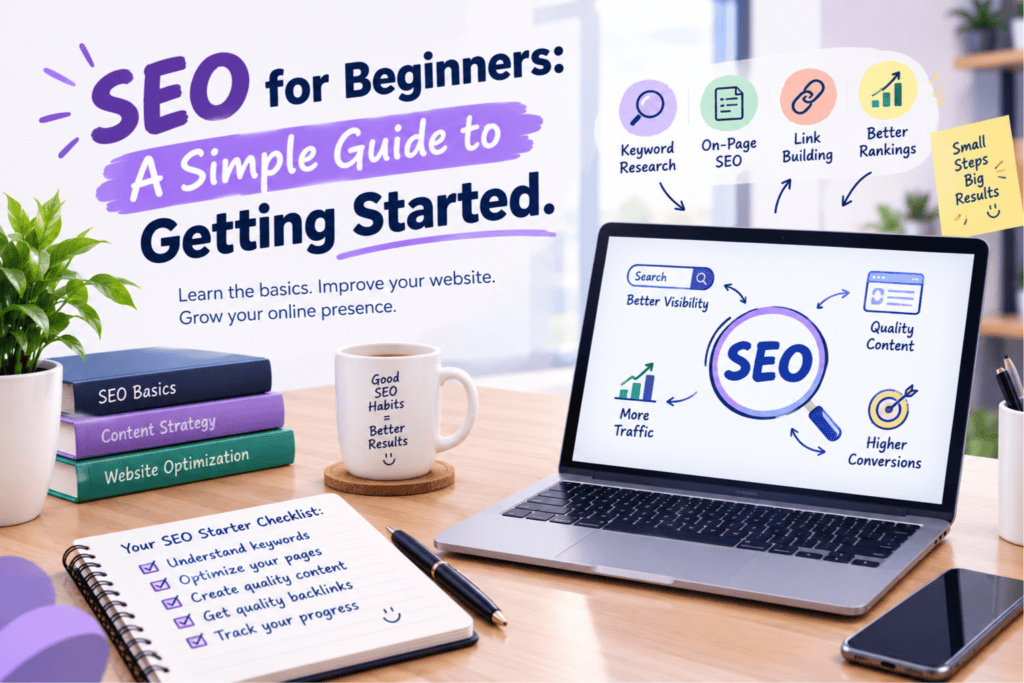
SEO for Beginners: A Simple Guide to Getting Started

Have you ever searched for something on Google and clicked on one of the first results? Most people do this every day when looking for products, services, or answers to their questions. But have you ever wondered why some websites appear at the top of search results while others appear much lower? The answer is often Search Engine Optimization (SEO). SEO is an important part of digital marketing that helps websites get more visitors from search engines. If you have a website or blog and want more people to find it online, learning SEO is a great place to start. The good news is that you do not need to be a technical expert to understand the basics. In this guide, we will explain SEO in simple words and show you how to get started. What Is SEO? SEO stands for Search Engine Optimization. It is the process of improving a website so that search engines like Google can understand its content and show it to people searching for related information. The main goal of SEO is to bring the right visitors to your website without paying for every click. Why Is SEO Important? SEO helps people discover your website when they search for information related to your business or blog. Here are some important benefits of SEO: SEO takes time and regular effort, but it can become a valuable part of your online growth. 1. Start With Keyword Research Keyword research is one of the first steps in SEO. It means finding the words and phrases people type into search engines when looking for information. For example, if you run a digital marketing blog, your keywords might include: Choose keywords that match your website and what your audience wants to know. You can use tools such as Google Keyword Planner and Google Trends to explore search terms. Try to understand what people are looking for before choosing a keyword. Avoid adding the same keyword too many times. Use it naturally in your content. 2. Create Helpful and Useful Content Content is an important part of SEO. Search engines aim to show users helpful information that answers their questions. When writing a blog post, focus on solving a problem or explaining a topic clearly. Use simple words, short paragraphs, and headings to make your content easy to read. For example, if your topic is SEO for beginners, explain the basic steps instead of using too many technical terms. Your content should be original, accurate, and useful. Avoid copying content from other websites because it does not help you build a strong website. 3. Improve Your On-Page SEO On-page SEO means improving the content and elements on your website pages so that search engines and visitors can understand them easily. Here are a few basic steps: These steps can help search engines understand your pages and make your website easier to use. 4. Make Your Website Mobile-Friendly Many people browse the internet using smartphones. If your website is difficult to use on a small screen, visitors may leave without reading your content. Make sure your website works well on mobile devices. Text should be easy to read, buttons should be simple to click, and pages should load quickly. A mobile-friendly website creates a better experience for visitors and supports your SEO efforts. 5. Improve Website Speed People do not like waiting for a website to load. Slow pages can make visitors leave before they find what they need. You can improve website speed by compressing large images, removing unnecessary plugins, using good hosting, and reducing unnecessary scripts. You can also use Google’s PageSpeed Insights to check your website performance and find areas that need improvement. A faster website can provide a better experience for visitors, especially those using mobile internet. 6. Learn the Basics of Technical SEO Technical SEO helps search engines find, crawl, and understand your website pages. As a beginner, start with these simple tasks: You can use Google Search Console to check indexing issues, monitor search performance, and see how Google understands your website. 7. Build Quality Backlinks Backlinks are links from other websites that point to your website. They can help search engines understand that your content is useful or worth referencing. However, not all links are equally valuable. Focus on earning relevant links from trusted websites rather than buying spammy links or using tricks to increase link numbers. You can attract backlinks by publishing useful guides, original research, helpful resources, and interesting content that other websites want to reference. 8. Track Your SEO Results SEO is not a one-time task. You need to check your results and improve your website regularly. Google Search Console can show which search terms bring visitors to your website, how often your pages appear in search results, and how many clicks they receive. Google Analytics can help you understand website traffic and what visitors do after arriving on your site. Use this information to identify successful pages, improve weak content, and find new opportunities. How Long Does SEO Take to Show Results? SEO usually takes time. You may notice improvements within a few months, but the timeline depends on your website, competition, content quality, and the work you do. New websites may need more time to build visibility and trust. There is no guaranteed way to reach the top of Google overnight. Focus on useful content, a good website experience, and regular improvements instead of looking for quick tricks. Conclusion SEO may seem difficult at first, but getting started is easier when you follow the basics. Begin with keyword research, create helpful content, improve your website pages, make your site mobile-friendly, and track your results. Remember, SEO is not just about ranking higher on Google. It is about helping people find the right information when they need it. With patience and regular effort, you can improve your website’s visibility, attract relevant visitors, and build a stronger online presence. Start with small steps, keep learning, and give your website time to
digital marketing agency
Blog

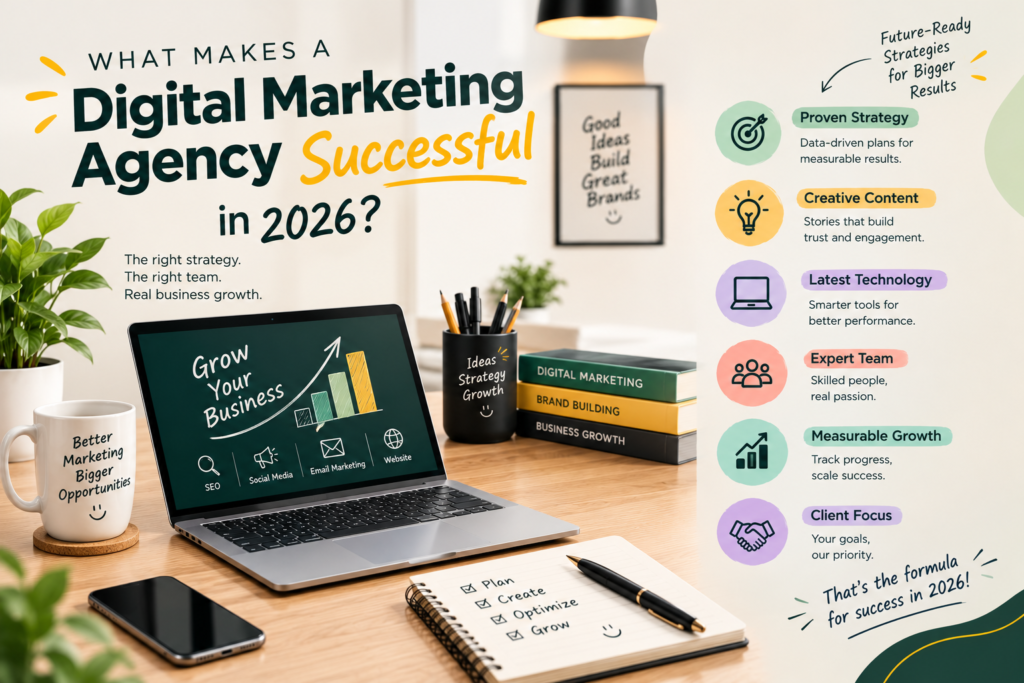
What Makes a Digital Marketing Agency Successful in 2026?

Digital marketing keeps changing as businesses adopt new technologies, customer habits evolve, and online competition grows. In 2026, having a website and posting on social media is no longer enough to stand out. Businesses need clear strategies, useful content, strong customer relationships, and measurable results to grow online. A successful digital marketing agency understands these changing needs and helps businesses reach the right audience through the right channels. It combines creativity, technology, and data to build marketing campaigns that support real business goals. 1. A Clear Digital Marketing Strategy A successful digital marketing agency starts with a clear plan. Every business has different goals, target customers, budgets, and challenges. Therefore, a single marketing strategy cannot work for everyone. Before launching a campaign, an agency should understand the client’s business, study its competitors, and identify its target audience. It should also set clear goals, such as increasing website traffic, generating leads, improving brand awareness, or increasing sales. A well-planned strategy helps businesses use their marketing budgets wisely. It also makes it easier to measure progress and identify areas that need improvement. In 2026, successful agencies focus on creating strategies that match business objectives rather than simply following popular marketing trends. 2. Strong Search Engine Optimization (SEO) Search engine optimization remains an important part of digital marketing. SEO helps businesses improve their visibility when people search online for relevant products, services, or information. However, modern SEO involves much more than adding keywords to website pages. It includes helpful content, technical website performance, mobile usability, relevant internal links, and a positive user experience. Search behavior is also changing as people use AI-powered search tools and conversational queries to find information. Businesses need clear, useful, and trustworthy content that directly answers their audience’s questions. A successful digital marketing agency understands these changes and develops SEO strategies around user needs. Instead of focusing only on rankings, it works toward attracting relevant visitors who are more likely to become customers. 3. Smart Use of Artificial Intelligence Artificial intelligence (AI) is becoming an important tool for digital marketing agencies in 2026. It can help marketers research topics, analyze campaign data, organize tasks, generate content ideas, and improve advertising workflows. AI tools can save time and help agencies work more efficiently. For example, an agency can use AI-assisted analysis to identify patterns in customer behavior or discover opportunities to improve an advertising campaign. However, technology alone does not guarantee success. AI-generated content may contain errors, lack originality, or fail to understand the audience’s real concerns. Successful agencies combine AI tools with human creativity, experience, fact-checking, and strategic thinking. They use technology to improve their work while ensuring that the final content remains accurate, helpful, and relevant. 4. High-Quality Content Marketing Content plays a major role in building trust and attracting potential customers. Blog posts, website pages, videos, infographics, email newsletters, and social media updates can help businesses explain their services and answer customer questions. In 2026, successful digital marketing agencies focus on creating content that provides real value instead of publishing articles simply to fill a website. For example, a company selling website design services could publish a guide explaining how to choose a mobile-friendly website. This content helps readers understand the topic while introducing the company’s expertise. Good content should be easy to understand, original, well-organized, and relevant to the target audience. Agencies should also update older content when information becomes outdated. A strong content strategy can support SEO, social media engagement, lead generation, and long-term brand growth. 5. Data-Driven Decisions A successful digital marketing agency does not depend only on guesswork. It uses data to understand campaign performance and make better decisions. Important metrics may include website traffic, conversion rates, cost per lead, customer acquisition cost, advertising return, and engagement levels. For example, if a paid advertising campaign receives many clicks but generates few inquiries, the agency may need to improve the landing page, review audience targeting, or adjust the advertising message. Regular performance analysis helps identify problems before they waste too much of the marketing budget. In 2026, agencies must also pay attention to data quality, privacy requirements, and the limitations of tracking tools. Clear reporting helps clients understand what their campaigns are achieving and where further improvements are possible. 6. Effective Social Media Marketing Social media remains a valuable way for businesses to connect with customers, share information, and build brand recognition. However, success requires more than posting frequently. A good social media strategy focuses on the platforms where the target audience is most active. It also uses suitable content formats, such as short videos, educational posts, customer stories, and interactive content. Successful agencies understand that different platforms serve different purposes. LinkedIn may be useful for business-to-business marketing, while Instagram may be better suited to visual storytelling and product discovery. They also pay attention to comments, messages, and audience feedback. Responding to customers and encouraging meaningful conversations can help a brand build stronger relationships. The goal is not simply to gain followers but to create engagement that supports wider business objectives. 7. Personalized Customer Experiences Customers expect businesses to understand their needs and provide relevant information. Personalized marketing can help companies communicate more effectively with different audience groups. For example, an online store might send product recommendations based on a customer’s interests, while a service provider might share helpful emails related to a visitor’s previous inquiry. Successful agencies use audience research, customer feedback, and available data to create more relevant marketing experiences. They also respect privacy rules and obtain appropriate consent when collecting or using personal information. Personalization should feel helpful rather than intrusive. When businesses provide useful information at the right time, they can improve customer engagement and encourage repeat business. 8. Transparency and Strong Client Communication Trust is one of the most important qualities of a successful digital marketing agency. Clients need to understand what services they are receiving, how campaigns are performing, and what improvements are being made. A reliable agency sets realistic expectations and explains its strategy in simple

What Does Digital Marketing Services Include
Blog

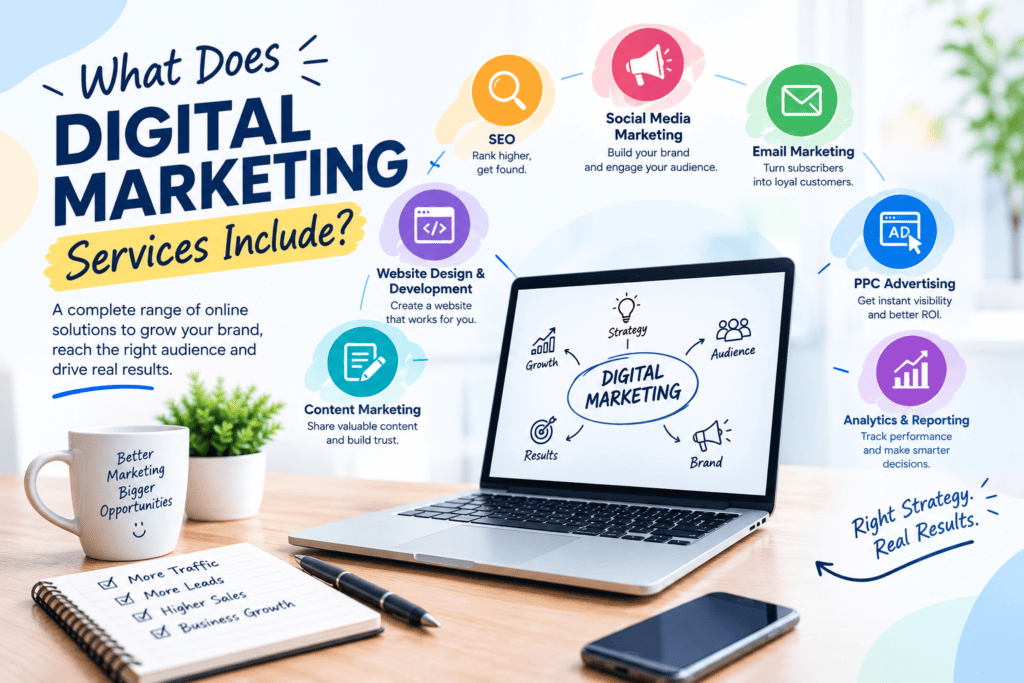
What Does Digital Marketing Services Include?

Today, many people use the internet to find products, services, and businesses. They search on Google, check social media, read customer reviews, and visit websites before making a decision. This is why digital marketing has become an important part of business growth. Digital marketing services help businesses reach people online, promote their products or services, and attract new customers. These services include SEO, social media marketing, content marketing, paid advertising, email marketing, website development, and more. But what exactly do digital marketing services include? Let’s explore the main services and understand how they can help a business grow. What Are Digital Marketing Services? Digital marketing services are methods used to promote a business through the internet and digital platforms. The main goal is to help businesses connect with the right audience, increase brand awareness, generate leads, and improve sales. Different businesses need different marketing services. For example, a local shop may need local SEO, while an online store may need SEO, social media marketing, and paid advertising. Here are the main services included in digital marketing. 1. Search Engine Optimization (SEO) Search Engine Optimization, or SEO, helps a website appear higher in search engine results. When people search for products or services related to your business, SEO can help them find your website. SEO services include keyword research, website optimization, content improvement, technical SEO, and link building. For example, if someone searches for a digital marketing agency in Delhi, a website with good SEO may have a better chance of appearing in the search results. SEO can help businesses attract more website visitors and reach people who are already looking for their services. 2. Social Media Marketing Social media marketing helps businesses promote their brands on platforms such as Instagram, Facebook, LinkedIn, and other social networks. It includes creating posts, sharing videos, designing graphics, planning content, and responding to comments and messages. Businesses can use social media to share updates, promote offers, show their products, and connect with customers. Regular posting and useful content can help businesses build an audience, increase engagement, and improve brand awareness. 3. Content Marketing Content marketing means creating and sharing useful information to attract potential customers. It includes blog posts, articles, videos, infographics, guides, and other helpful content. For example, a digital marketing agency can publish blogs about SEO tips, social media strategies, and online advertising. This content can help readers learn something useful while introducing them to the agency’s services. Good content can also support SEO, bring visitors to a website, and build trust with potential customers. 4. Pay-Per-Click (PPC) Advertising Pay-per-click advertising is a paid marketing method in which businesses generally pay when someone clicks on their advertisement. These ads can appear on search engines, social media platforms, and other websites. PPC services include keyword research, ad creation, audience targeting, budget management, and campaign tracking. One benefit of PPC is that it can help businesses reach potential customers quickly. However, campaigns need proper planning and regular improvement to get good results. 5. Website Design and Development A website is often the first place where people learn about a business. A good website should look professional, load quickly, work well on mobile devices, and be easy to use. Website design and development services include creating web pages, improving website speed, designing landing pages, and making websites mobile-friendly. A well-designed website helps visitors understand what a business offers and how they can contact or buy from it. 6. Email Marketing Email marketing allows businesses to communicate directly with customers through email. It includes newsletters, special offers, product updates, welcome emails, and follow-up messages. For example, an online store can send emails about new products or discounts to people who have signed up for updates. Email marketing helps businesses stay connected with their audience, build customer relationships, and encourage repeat purchases. 7. Local SEO Local SEO helps businesses reach customers in a specific city or area. It is especially useful for restaurants, clinics, salons, shops, agencies, and other local service providers. Local SEO services include improving a Google Business Profile, managing online reviews, adding correct business details, and creating location-based website content. When people search for services near them, local SEO can help a business become easier to find. 8. Online Reputation Management Customers often check online reviews before choosing a business. Online reputation management helps businesses maintain a positive and professional image online. It includes monitoring reviews, responding to customer feedback, answering concerns, and encouraging satisfied customers to share honest reviews. A good online reputation can help build trust and make potential customers feel more confident about choosing a business. 9. Influencer Marketing Influencer marketing involves working with people who have an audience on social media or other online platforms. These people can introduce a brand, product, or service to their followers through posts, videos, reviews, and other content. Influencer marketing can help businesses reach new audiences and build interest in their products. Choosing an influencer whose audience matches the business’s target customers is important. 10. Analytics and Reporting Analytics and reporting help businesses understand whether their marketing efforts are working. Marketers can track website visitors, clicks, leads, sales, and other important results using digital analytics tools. These reports help businesses understand which campaigns perform well and which areas need improvement. By reviewing results regularly, businesses can make better decisions and use their marketing budget more wisely. Why Are Digital Marketing Services Important? Digital marketing services help businesses become more visible online and connect with potential customers. They can also help businesses understand their audience, build trust, and improve sales. Another important benefit is that many digital marketing activities can be measured. Businesses can review their results and make changes when needed. However, not every business needs every service. The best approach depends on the business’s goals, target audience, industry, and budget. Conclusion Digital marketing services include many activities, such as SEO, social media marketing, content marketing, PPC advertising, website development, email marketing, local SEO, reputation management, influencer marketing, and analytics. Each service has

digital marketing
Blog

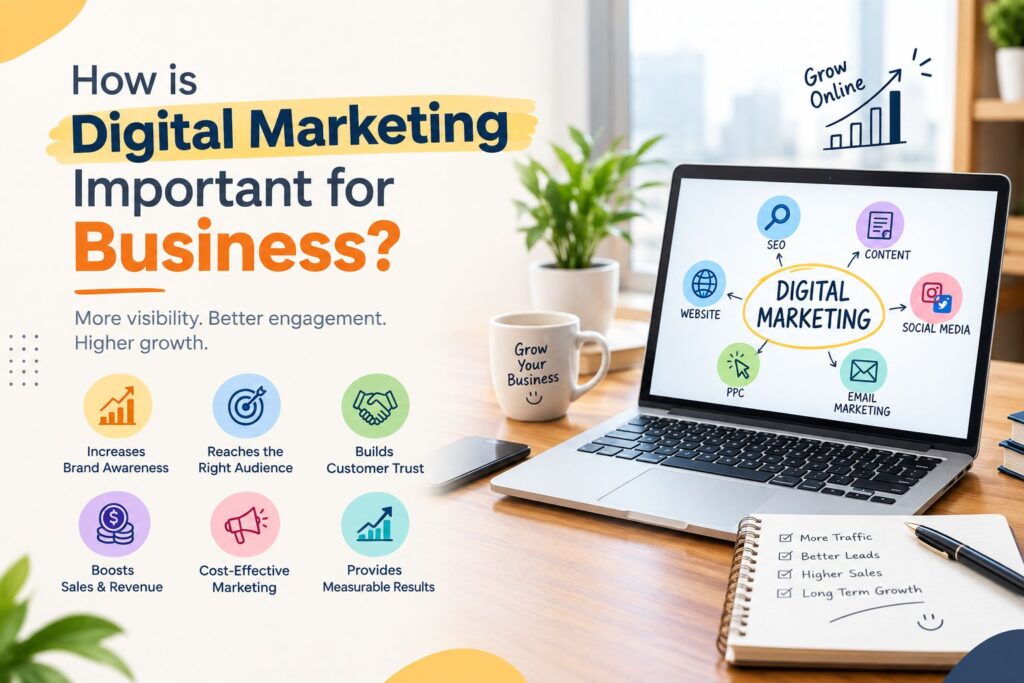
How is digital marketing important for business?

Today, most people use the internet to find information, products, and services. Before buying something, people often search on Google, check social media, read reviews, and visit websites. This change in customer behavior has made digital marketing very important for businesses. Digital marketing helps businesses reach people online. It can help a business get more visitors, find new customers, build trust, and increase sales. It is useful for small businesses, startups, and large companies. But why is digital marketing important for business? Let’s understand it in simple words. What Is Digital Marketing? Digital marketing means promoting a business, product, or service through the internet and digital platforms. It includes many activities, such as: The main goal of digital marketing is to connect a business with the right people at the right time. 1. Helps You Reach More People One of the biggest benefits of digital marketing is that it helps businesses reach more people. In the past, businesses mainly used newspapers, banners, television, and radio to promote their products. These methods can still be useful, but they may not reach the right people. With digital marketing, businesses can reach customers in their city, country, or even other parts of the world. For example, a small business in Delhi can use digital marketing to reach customers across India. 2. Helps People Find Your Business Having a website is not enough. People need to be able to find it. This is where SEO can help. SEO improves a website so that it can appear higher in search engine results. For example, if someone searches for “digital marketing agency in Delhi,” businesses that have good SEO may have a better chance of appearing in the search results. When more people find your business online, you have more chances to get visitors, leads, and customers. 3. Helps Build Brand Awareness People usually trust brands they know. Digital marketing can help more people learn about your business. You can use social media posts, videos, blogs, online ads, and other content to tell people about your brand. When people see your business regularly online, they may remember your brand when they need your product or service. This can help your business become more familiar to potential customers. 4. Helps You Reach the Right Customers Digital marketing allows businesses to target specific groups of people. For example, you can target customers based on their: This means your marketing message can reach people who are more likely to be interested in your product or service. This can help you spend your marketing budget in a better way. 5. Is Affordable for Small Businesses Many small businesses think that marketing is expensive. Digital marketing provides options for different budgets. You can start with simple methods such as social media marketing, SEO, and useful blog content. You can also run paid ads with a budget that suits your business. One useful thing about online advertising is that you can change your budget or stop a campaign if it is not giving good results. This makes digital marketing a useful option for small and growing businesses. 6. Helps Generate More Leads A lead is a person who shows interest in your business. For example, someone may visit your website, fill out a contact form, call your business, or send you a message after seeing your advertisement. Digital marketing can help you get more such leads. SEO, social media, paid ads, landing pages, and content marketing can all help bring potential customers to your business. With the right strategy, these leads can become paying customers. 7. Helps Increase Sales The main goal of most businesses is to increase sales. Digital marketing can help with this goal. A customer may first discover your business through Google. Later, they may see your social media post, visit your website, read customer reviews, and then decide to buy from you. Digital marketing can help guide customers through this process. A good website, useful content, clear offers, and simple contact or purchase options can make it easier for customers to take action. 8. Helps Build Trust Trust is very important when people choose a business. Before buying a product or service, customers may look at your website, social media pages, reviews, and customer feedback. Digital marketing gives businesses many ways to build trust. You can share: When customers see helpful and honest information, they may feel more comfortable choosing your business. 9. Helps You Connect With Customers Digital marketing is not only about selling. It also helps businesses communicate with customers. Social media gives customers a place to ask questions, share feedback, and interact with a business. Businesses can reply to comments and messages and understand what their customers need. Good communication can help create better relationships with customers. 10. Helps Local Businesses Digital marketing is very useful for businesses that serve customers in a specific area. For example, restaurants, salons, gyms, clinics, coaching centers, real estate companies, and local service providers can use local SEO to reach people nearby. When people search for a business or service near them, a strong online presence can help your business get noticed. Local SEO, online reviews, Google Business Profile, and location-based content can help improve local visibility. 11. Helps You Understand Your Customers Another important benefit of digital marketing is that you can learn more about your customers. You can see: This information can help you understand what your customers like. You can then improve your marketing based on real information instead of guessing. 12. Helps You Compete With Other Businesses Almost every industry has competition. If your competitors are active online and your business is not, you may lose potential customers. Digital marketing helps you stay visible and compete in the online market. You can use SEO, social media, content, and online ads to show customers why they should choose your business. Even a small business can compete with larger companies by creating useful content and focusing on the right audience. 13. Helps Build Long-Term Growth Digital

benefits of digital marketing services
Blog

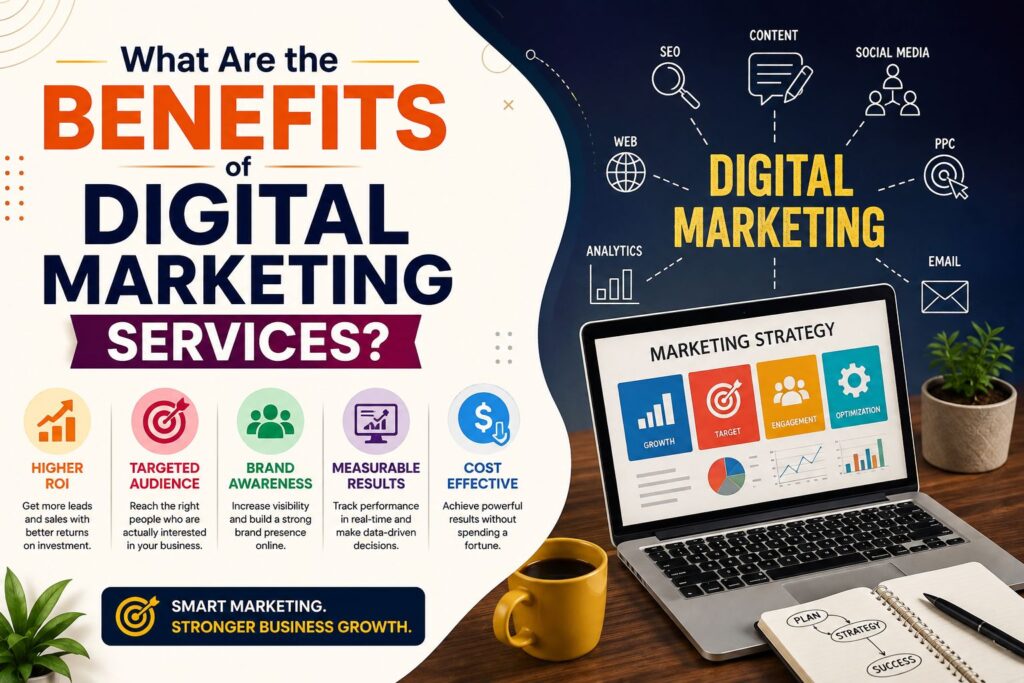
What Are the Benefits of Digital Marketing Services?

In today’s digital world, customers spend more time online than ever. People look for products on Google. They find brands on social media. They read online reviews and compare prices. Then, they decide what to buy based on this information. For businesses, this is a great chance to connect with potential customers using digital marketing services. Digital marketing includes various online strategies such as Search Engine Optimization (SEO), social media marketing, content marketing, pay-per-click advertising, email marketing, and online reputation management. These strategies help businesses increase their visibility, attract potential customers, and build long-term relationships. But what makes digital marketing so valuable for modern businesses? Let’s look at some of its major benefits. 1. Helps Reach the Right Audience One of the biggest benefits of digital marketing services is the ability to reach a highly targeted audience. Traditional advertising often displays a message to a broad audience, even when many people may not be interested in the product or service. Digital marketing allows businesses to target customers based on factors such as location, interests, age, search behavior, demographics, and online activities. This means your marketing message can reach people who are more likely to need and purchase your products or services. Targeted marketing can make campaigns more relevant and improve the overall quality of leads. 2. Increases Online Visibility Having a website is not enough if potential customers cannot find it. Digital marketing helps businesses improve their visibility across search engines, social media platforms, websites, and other online channels. SEO can help your website appear higher in relevant search results, while social media marketing can increase your brand’s visibility among potential customers. Content marketing can also attract users by providing useful and informative information. A stronger online presence makes it easier for customers to discover your business. 3. Generates Quality Leads Getting traffic to your website is important, but attracting the right traffic is even more valuable. Digital marketing services can help businesses generate qualified leads from people who are already interested in their products or services. For example, SEO can attract users searching for specific solutions, while PPC advertising can target people with strong purchase intent. Social media and content marketing can also introduce your brand to potential customers and encourage them to take the next step. With the right strategy, digital marketing can turn online visitors into genuine business opportunities. 4. Cost-Effective Marketing Solution Digital marketing can be a cost-effective option for businesses of different sizes. Instead of spending large amounts on traditional advertising, businesses can select digital channels that match their goals and budget. Paid advertising platforms allow businesses to set campaign budgets and target specific audiences. Organic strategies such as SEO, content marketing, and social media can also generate long-term value when managed consistently. This flexibility makes digital marketing particularly useful for startups and small businesses looking to compete with larger brands. 5. Provides Measurable Results Another important advantage of digital marketing is that its performance can be measured. Businesses can track various metrics, including website visits, clicks, impressions, engagement, leads, conversions, and advertising performance. This data helps businesses understand which strategies are producing results and which areas require improvement. Instead of simply guessing whether a campaign worked, marketers can analyze actual performance and make data-driven decisions. Continuous monitoring and optimization can make future campaigns more effective. 6. Builds Brand Awareness Customers are more likely to remember brands they regularly see online. Digital marketing provides businesses with multiple opportunities to introduce their brand to potential customers. Through social media posts, blogs, videos, advertisements, search results, and email campaigns, businesses can consistently communicate their message and showcase what makes them different. Over time, this repeated exposure can increase brand recognition and help your business stay in the minds of potential customers. 7. Improves Customer Engagement Digital marketing is not only about selling products or services. It also gives businesses an opportunity to communicate directly with their customers. Social media platforms, email, live chats, comments, and online communities allow businesses to interact with their audience. They can answer questions, respond to feedback, share useful information, and address customer concerns. This two-way communication can help businesses create stronger relationships and improve customer satisfaction. 8. Helps Build Trust and Credibility Trust plays an important role in purchasing decisions. Before choosing a company, customers often check its website, reviews, social media presence, and online reputation. A professional website, valuable content, positive reviews, active social media profiles, and helpful customer communication can create a stronger sense of credibility. Digital marketing services help businesses consistently showcase their expertise and provide useful information, making it easier for potential customers to feel confident about choosing the brand. 9. Gives a Competitive Advantage The digital marketplace is highly competitive. Businesses that maintain a strong online presence can often capture opportunities before competitors do. Digital marketing allows businesses to monitor competitors, identify customer trends, discover new opportunities, and adapt their strategies. By continuously improving SEO, content, advertising, and social media activities, a business can remain visible and competitive. Businesses that ignore digital channels may find it increasingly difficult to reach customers who rely on the internet to research and compare options. 10. Supports Long-Term Business Growth The key benefit of digital marketing is that it helps businesses grow sustainably. A well-planned digital marketing strategy does not focus only on immediate sales. It builds website authority, boosts brand recognition, strengthens customer relationships, and creates a steady stream of leads over time. SEO can keep bringing in organic traffic. Valuable content stays useful for months or even years. Email marketing helps nurture current customers. When digital strategies team up, they build a solid base for lasting growth. Conclusion Digital marketing services help businesses connect with today’s customers. They also support growth in a competitive market. Digital marketing boosts online visibility, generates quality leads, and improves customer engagement. It also builds brand credibility. These benefits support nearly every stage of the customer journey. Successful digital marketing needs more than posting on social media or running ads. Businesses need a

Digital Marketing Services in delhi
Blog

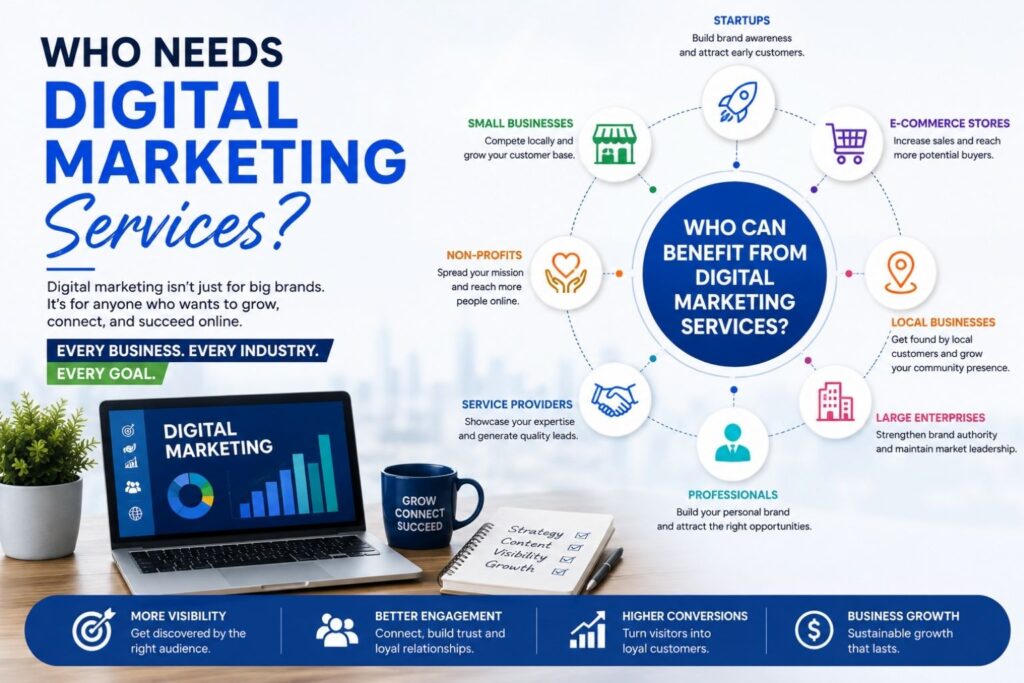
Who Needs Digital Marketing Services?

In today’s connected world, customers are spending more time online than ever before. They search Google for products and services, discover brands on social media, read online reviews, watch videos, compare options, and make purchases through websites and apps. As customer behavior continues to change, businesses need to be where their audience is looking. This is why digital marketing services are valuable for businesses across industries. From startups and small local businesses to ecommerce brands and large companies, almost every organization can benefit from a strong digital presence. But who actually needs digital marketing services in delhi? The answer is broader than many business owners realize. 1. Startups and New Businesses Launching a new business is exciting, but getting noticed can be challenging. A new company may have an excellent product or service but struggle to attract its first customers. Digital marketing helps startups build visibility from the beginning. Search engine optimization, social media marketing, content creation, paid advertising, and email marketing can introduce a new brand to potential customers. A strong digital strategy can also help startups understand their audience, test marketing messages, generate leads, and build brand awareness without relying entirely on expensive traditional advertising. 2. Small and Local Businesses Small businesses often depend on customers within a particular city or service area. Restaurants, salons, clinics, repair services, educational institutes, real estate companies, consultants, and local retailers can all benefit from digital marketing. Local SEO, social media marketing, online reviews, and location-based advertising can help these businesses appear when nearby customers search for relevant products or services. For example, someone searching for a digital marketing agency in Delhi is likely looking for a service provider in a specific location. A business that has optimized its website and online profiles for local searches has a better chance of attracting that potential customer. 3. Ecommerce Businesses Ecommerce businesses operate almost entirely in the digital environment, making digital marketing especially important for them. Online stores need to attract visitors, showcase their products, build customer trust, and encourage purchases. SEO can help products appear in search results, while social media and paid advertising can introduce products to new audiences. Email marketing can also help ecommerce businesses recover abandoned carts, announce new products, provide personalized recommendations, and encourage repeat purchases. With the right combination of strategies, digital marketing can help ecommerce brands increase website traffic, conversions, and customer retention. 4. Service-Based Businesses Businesses that sell services rather than physical products also need a strong online presence. Examples include lawyers, accountants, consultants, marketing agencies, IT companies, designers, architects, educators, and professional trainers. Potential customers often research service providers online before making contact. They may visit a website, read reviews, check previous work, and compare different providers. Digital marketing helps service businesses demonstrate expertise through blogs, case studies, testimonials, videos, social media content, and informative website pages. 5. B2B Companies Business-to-business companies sometimes assume that digital marketing is mainly for consumer brands. In reality, B2B companies can benefit significantly from digital marketing. B2B buyers also research online before contacting a supplier or service provider. They may search for solutions, compare companies, read industry reports, and evaluate expertise. Content marketing, SEO, LinkedIn marketing, email campaigns, webinars, and paid advertising can help B2B companies reach decision-makers and generate qualified leads. 6. Established Companies Digital marketing isn’t only for businesses trying to get started. Established companies also need to maintain their online visibility and stay connected with customers. Even a well-known brand can lose market share if competitors provide a better digital experience. Regular content, social media engagement, SEO, online advertising, and customer communication can help established companies remain relevant. Digital marketing can also help existing brands introduce new products, enter new markets, and strengthen customer loyalty. 7. Real Estate Businesses Real estate is a highly competitive industry where customers frequently research properties and agents online. Real estate businesses can use digital marketing to promote property listings, generate inquiries, build personal brands, and connect with buyers and sellers. Search engine optimization, social media advertising, video marketing, property-focused content, email marketing, and lead-generation campaigns can all contribute to a successful real estate marketing strategy. 8. Educational Institutions and Training Providers Schools, colleges, coaching centers, online course providers, and professional training institutes also benefit from digital marketing. Students and parents often search online for courses, institutions, reviews, fees, locations, and career opportunities. A strong digital presence can help educational organizations reach prospective students. Content marketing, SEO, social media, video marketing, paid campaigns, and email communication can be used to attract and nurture potential students. 9. Healthcare and Wellness Businesses Healthcare providers and wellness businesses also need to make their services easy to discover online. Clinics, dental practices, fitness centers, wellness brands, and other providers can increase their visibility through digital marketing. This helps them educate their audiences effectively. Informative content, local SEO, social media, websites, and online reputation management all help businesses share their services. They also build trust and credibility. For these industries, keeping accurate info and a strong online presence is key. Customers often look up providers before deciding. 10. Nonprofits and Organizations Digital marketing is not limited to businesses focused on sales. Nonprofits, community groups, and similar organizations can use digital channels. They can spread awareness, attract supporters, promote campaigns, and encourage donations. Social media, email marketing, content marketing, video campaigns, and search optimization help organizations connect with people who care about their mission. A strong digital presence helps supporters find an organization and see how they can contribute. 11. Personal Brands and Professionals Individuals can also benefit from digital marketing. Freelancers, consultants, coaches, creators, speakers, authors, and other professionals need a strong personal brand. A professional website and social media presence can help you show your skills. Plus, a solid content strategy, good SEO, and email marketing can attract new opportunities. In many industries, a strong personal brand can become an important competitive advantage. Why Does Every Business Need a Digital Presence? The common factor among all these businesses is customer behavior. People are increasingly

digital marketing services
Blog

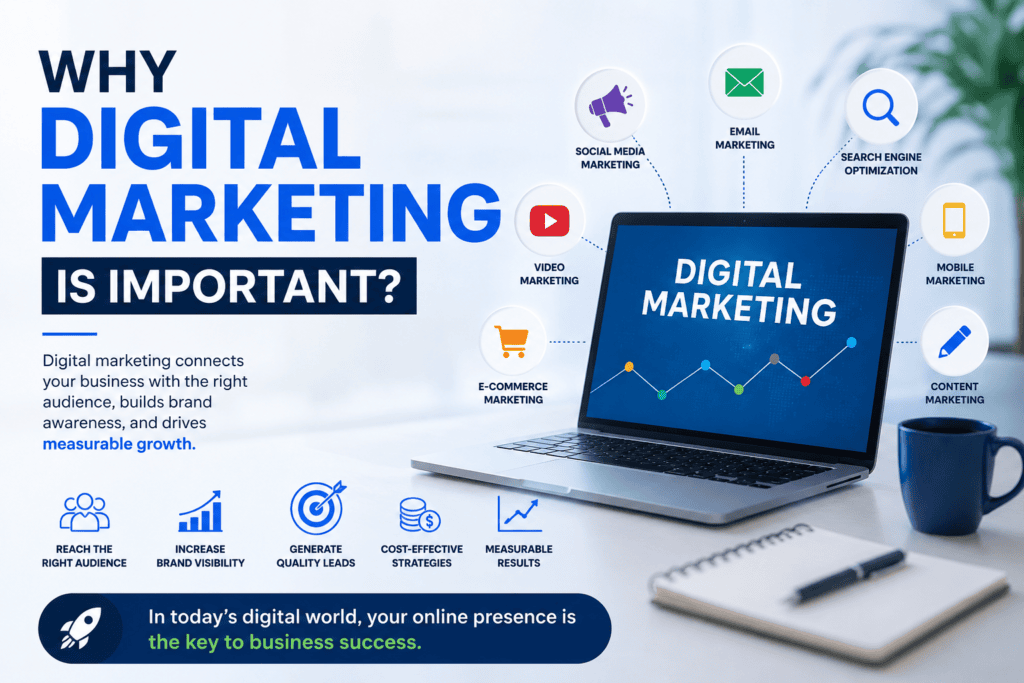
Why Digital Marketing Is Important?

The way people discover, research, and buy products has changed dramatically. Today, customers often search online before choosing a product, service, or business. They check prices and read reviews. They visit websites and browse social media. They also look for recommendations before deciding. Due to this change in how consumers act, a strong online presence is now vital for all businesses. This is where digital marketing becomes important. Digital marketing lets businesses reach their target audience online. This includes search engines, social media, websites, email, and online ads. It helps businesses boost visibility, attract customers, build trust, and drive sales. What Is Digital Marketing? Digital marketing refers to the promotion of products, services, or brands through digital channels. It includes several strategies: Unlike traditional marketing, digital marketing allows businesses to communicate with specific audiences and measure how people interact with their campaigns. This makes it easier to understand customer behavior and improve marketing strategies over time. 1. Helps Businesses Reach a Larger Audience One of the biggest reasons digital marketing is important is its ability to reach a large audience. A business is no longer limited to customers who live nearby or see a physical advertisement. Through search engines, social media, websites, and digital advertising, businesses can reach people across cities, countries, and even international markets. For example, a small business in Delhi can use digital marketing to attract customers throughout India. With the right strategy, even a growing company can compete for attention in a crowded market. 2. Increases Online Visibility Having a website alone does not guarantee that customers will find your business. Thousands of websites compete for attention every day, making online visibility extremely important. Digital marketing strategies such as SEO, content marketing, social media, and paid advertising help businesses become more visible online. When your website appears in search results for relevant keywords or your content reaches potential customers on social media, your brand becomes easier to discover. 3. Helps Target the Right Customers Traditional advertising often involves showing the same message to a broad audience. Digital marketing provides much more precise targeting. Businesses can create campaigns based on factors such as location, age, interests, search behavior, demographics, and previous interactions with a brand. This means a company can focus its marketing budget on people who are more likely to be interested in its products or services. Targeted marketing can improve campaign efficiency and reduce unnecessary advertising expenses. 4. Cost-Effective Marketing Digital marketing can be more flexible and cost-effective than many traditional advertising methods. Businesses can choose budgets according to their goals and financial resources. For example, companies can start with organic SEO, content marketing, and social media activities before investing heavily in paid advertising. Paid campaigns can also be adjusted according to performance. If an advertisement is not generating satisfactory results, marketers can modify the audience, message, budget, or strategy. This flexibility makes digital marketing suitable for startups, small businesses, and established companies. 5. Generates Measurable Results Another major advantage of digital marketing is the ability to measure performance. Businesses can track metrics like website traffic, impressions, clicks, engagement, leads, conversions, and ad costs. These insights help marketers understand which strategies are producing results. For example, if one advertising campaign brings in more leads than another, the business can find out why. Then, it can divide resources based on that analysis. This data-driven approach allows businesses to make more informed marketing decisions. 6. Builds Brand Awareness and Trust Customers are more likely to choose brands they recognize and trust. Digital marketing gives businesses many opportunities to establish credibility. Businesses can share helpful blog posts, educational videos, customer testimonials, case studies, social media updates, and informative guides. Consistently providing valuable information can position a company as knowledgeable and trustworthy. Online reviews and customer feedback also influence brand perception. A strong online presence helps boost brand reputation. Responding well to customers is key. 7. Improves Customer Engagement Digital marketing is not about selling products. It also allows businesses to communicate directly with customers. Social media platforms, email, websites, and messaging channels provide opportunities for businesses to answer questions, collect feedback, address concerns, and share updates. This two-way communication helps businesses know what customers want. It also builds stronger relationships. Customers appreciate brands that listen and respond rather than simply sending promotional messages. 8. Supports Local Businesses Digital marketing is particularly valuable for local businesses. Local SEO and location-based ads help businesses connect with people looking for products and services nearby. For example, if someone searches for a “digital marketing agency in Delhi,” they want a service there. Improving online presence for local searches can help a business attract more customers. Google Business Profiles, local content, customer reviews, and location-specific SEO can all contribute to stronger local visibility. 9. Helps Businesses Compete With Larger Brands Digital marketing has created opportunities for smaller businesses to compete with larger companies. A small business might lack the ad budget of a big corporation. But it can still grow an audience. It can do this through high-quality content, SEO, social media, and targeted ads. Creative ideas, valuable content, excellent customer service, and a well-planned digital strategy can help smaller brands stand out. 10. Increases Leads and Sales Ultimately, one of the primary goals of marketing is to generate business. Digital marketing can help guide potential customers through the buying journey. A customer might find a brand by searching on Google. Then, they could visit the website, follow its social media, read a blog, and sign up for emails. Finally, they may decide to make a buy. Digital marketing channels can team up to help at every stage of this journey. When websites focus on conversions and campaigns reach the right people, digital marketing enables businesses to obtain qualified leads and boost sales. 11. Keeps Businesses Competitive Consumer preferences and digital trends change constantly. Businesses that fail to adapt may struggle to remain competitive. Digital marketing helps companies track market trends, study competitors, understand customer behavior, and try new strategies. Businesses can

digital marketing services
Blog

What Are Digital Marketing Services?

In today’s competitive world, a strong online presence is essential. Customers now depend on search engines, social media, websites, email, and online reviews. They use these tools to find businesses and decide what to buy. This is where digital marketing services play an important role. Digital marketing services cover many online strategies. Businesses use these to promote their products, services, and brands. These services improve search engine rankings. They also manage social media campaigns and run paid ads. They help businesses reach the right audience at the right time. No matter if you’re a startup, local business, or established company, knowing digital marketing services helps you pick the right strategies for lasting growth. What Are Digital Marketing Services? Digital marketing services help promote a business using digital channels. Digital marketing is different from traditional methods like newspapers, TV, radio, and billboards. It uses online platforms to connect with potential customers. These services may include: The main goal is not simply to increase online visibility. A good digital marketing strategy seeks to attract the right visitors. It generates qualified leads and builds strong customer relationships. In the end, it boosts conversions and revenue. Why Are Digital Marketing Services Important? Consumers spend a lot of time online. They research products, compare services, read reviews, and talk to brands. A business must be visible where potential customers search. If not, it risks losing valuable opportunities. Digital marketing services allow businesses to reach their target audience more efficiently. They also show clear results. This helps marketers see what works and what needs fixing. Another important advantage is flexibility. Businesses can adjust their campaigns based on performance, audience behavior, market trends, and changing business objectives. Major Types of Digital Marketing Services 1. Search Engine Optimization (SEO) SEO is one of the most important digital marketing services. It focuses on improving a website’s visibility on search engines such as Google and Bing. SEO involves several tasks, such as: The goal is to help a website rank for relevant search terms and attract organic traffic. Being on the first page of search results can help attract customers looking for your service. 2. Social Media Marketing Social media platforms let businesses talk directly to their audiences. Social media marketing is about creating, sharing, and promoting content. You do this on platforms like Instagram, Facebook, and LinkedIn. A social media strategy may include educational posts, promotional content, videos, reels, customer stories, polls, and industry updates. The goal is to increase brand awareness. We want to boost engagement, build community, and drive traffic to the website. It also aims to generate leads through social media. 3. Pay-Per-Click Advertising Pay-per-click advertising, known as PPC, is a form of paid digital advertising. Businesses only pay when users click their ads. PPC includes common types like search engine advertising, display advertising, social media advertising, and shopping campaigns. A key advantage of PPC is that it helps businesses reach potential customers fast. Campaigns can be targeted based on keywords, location, demographics, interests, and other factors. Successful PPC management involves: 4. Content Marketing Content marketing focuses on creating valuable and relevant content for a specific audience. Instead of promoting their products, businesses offer valuable information. This helps potential customers tackle issues and make informed decisions. Common forms of content include blogs, articles, videos, infographics, guides, case studies, ebooks, and social media content. Good content can improve SEO performance, increase website traffic, establish industry authority, and build trust with potential customers. 5. Email Marketing Email marketing allows businesses to communicate directly with customers and prospects. Companies can use emails to share newsletters, special offers, product updates, educational content, and personalized recommendations. Effective email marketing involves more than sending promotional messages. Businesses should: When used correctly, email marketing can help businesses maintain customer relationships and encourage repeat purchases. 6. Website Design and Development A website is often the first place where potential customers learn more about a business. Therefore, website design is an important part of digital marketing. A professional business website should be visually appealing, easy to navigate, mobile-friendly, secure, and fast-loading. It should clearly show what the business offers. Also, it needs to give visitors easy ways to take action. Digital marketing agencies often offer website design and development. They also create landing pages and optimize conversion rates. This helps enhance the overall customer journey. 7. Online Reputation Management Online reviews and customer feedback can have a significant impact on purchasing decisions. Online reputation management helps businesses keep track of their image. It improves their presence on review sites, search results, and social media. This includes watching customer reviews, responding to feedback in a professional way, encouraging happy customers to share their experiences, and properly handling negative feedback. A strong online reputation can increase customer confidence and strengthen brand credibility. 8. Local SEO Local SEO is very important for businesses that serve customers in specific areas. It aims to increase visibility for local searches. For example, it helps businesses appear in search results for queries like “restaurant near me,” “digital marketing agency in Delhi,” and “best salon nearby.” Local SEO includes: This helps businesses draw in customers looking for products or services nearby. 9. Analytics and Reporting Digital marketing provides businesses with access to valuable performance data. Analytics and reporting help marketers see website traffic and customer behavior. They also track conversions, ad performance, and other key metrics. Businesses can analyze this information. They can find successful campaigns and spot areas for improvement. Data-driven marketing helps divide budgets well. It lets businesses create strategies based on real customer behavior, not guesses. How Digital Marketing Services Help Businesses Grow Digital marketing services offer great support to businesses at all growth stages. Digital marketing helps new businesses build brand awareness and create an online presence. An established company can increase website traffic. It can also generate leads, keep customers, and explore new markets. Digital marketing also allows businesses to target specific audiences. Campaigns can be tailored to audience segments. Factors include location, interests, search behavior, demographics,

Scroll to Top